
Cart
0
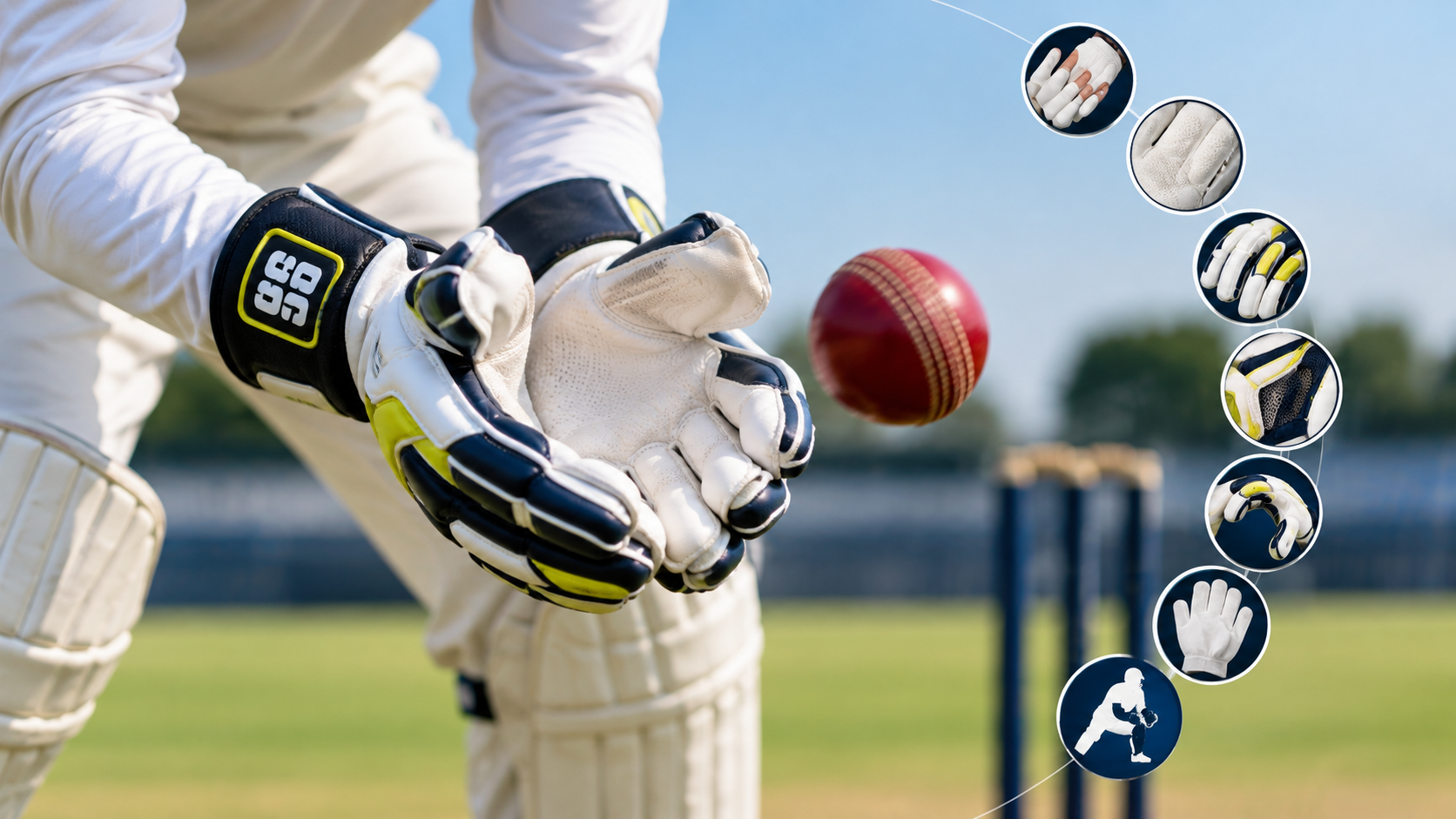
Wicketkeeping is one of the most demanding roles in cricket. Every delivery requires quick reactions, reliable hand positioning, and the confidence to take catches or complete stumpings in a fraction of a second. With modern cricket becoming faster and more aggressive, the right wicketkeeping equipment can make a noticeable difference.
Among the most important pieces of equipment are SS keeping gloves. However, choosing a pair should involve more than simply looking at the brand, appearance, or price. The right gloves need to match your hand size, playing level, comfort requirements, and the conditions in which you play.
Here are seven important things to check before buying your next pair.
1. Check the Fit and Size
Fit should be your first priority when choosing SS keeping gloves. A glove that is too loose can move around your hand, while one that is too tight can restrict movement and become uncomfortable during long keeping sessions.
Your fingertips should sit comfortably inside the glove without excessive empty space. At the same time, your fingers should be able to flex naturally.
Before purchasing, check the manufacturer's sizing guide and measure your hand correctly. If possible, try the gloves with your wicketkeeping inners because the added thickness can affect the final fit. Current wicketkeeping guides also emphasize a snug fit with enough freedom for natural finger movement.
2. Look at Palm Grip and Ball Control
A wicketkeeper needs dependable grip to collect fast deliveries, edges, and deflections. This makes palm construction another important factor.
When comparing SS keeping gloves, look for a palm that provides a good balance between grip, flexibility, and durability. The palm should allow you to receive the ball confidently without feeling excessively stiff.
The ideal grip can also depend on playing conditions. Hot and humid conditions may increase sweating, while wet conditions can make ball control more challenging. A well-designed palm can help maintain consistent handling throughout a session.
Remember that more grip is not automatically better. The palm should still allow natural hand closure and good feel.
3. Examine Finger Protection
Wicketkeepers regularly face high-speed deliveries from close range, so finger protection should never be overlooked.
Check the construction around the fingers, fingertips, and thumb. Good SS keeping gloves should provide suitable cushioning and protection without becoming unnecessarily bulky.
The goal is to find a balance between impact protection and mobility. Excessive padding can make the gloves feel stiff, while insufficient protection may leave your fingers more exposed to impact.
For competitive cricket, this becomes particularly important when keeping to faster bowlers.

4. Check the Webbing and Glove Design
The webbing between the thumb and index finger is a distinctive feature of wicketkeeping gloves. It helps create the catching area and supports ball collection.
However, wicketkeeping gloves are subject to specific playing regulations. The MCC Laws state that webbing is permitted only between the index finger and thumb, with restrictions on its construction and dimensions.
Therefore, don't just look at how large the catching area appears. Make sure the gloves are designed for legitimate wicketkeeping use and are suitable for the competition in which you play.
5. Consider Comfort and Flexibility
A wicketkeeper may spend an entire innings crouching, standing, moving sideways, and repeatedly catching the ball. Gloves that feel comfortable for five minutes may not feel comfortable after an hour.
When trying SS keeping gloves, flex your fingers, close your hands, and simulate your normal keeping position. Look for unnecessary pressure around the fingertips, palm, or wrist.
Modern wicketkeeping gloves are increasingly designed to combine protection with flexibility because keepers need quick hand movements as well as impact resistance. Comfort, grip, and protection remain three of the most important selection factors.
6. Don't Ignore Wicketkeeping Inner Gloves
Outer gloves aren't the only part of your hand protection system. Inner gloves can improve comfort, absorb sweat, and provide an additional layer between your hands and the outer gloves.
Padded or chamois-style wicketkeeping inners are particularly useful for players who spend long periods behind the stumps. They can also help reduce friction and improve the fit inside the outer glove.
This is especially relevant in warmer playing conditions, where sweat can affect comfort and glove performance. Recent cricket gear guides continue to highlight dedicated wicketkeeping inners as an important part of a keeper's equipment setup.
7. Match the Gloves to Your Playing Level
Finally, consider where and how often you play.
A junior or beginner wicketkeeper may need a lightweight, comfortable option that provides dependable protection without excessive bulk. Club-level players may want a stronger combination of durability, grip, and protection for regular matches and practice sessions.
Competitive players who face faster bowling and longer playing schedules may prioritize premium construction, improved catching feel, stronger protection, and long-term durability.
Don't choose gloves simply because they are the most expensive option. Choose a pair that fits your hand, playing style, experience, and requirements.
How to Make Your SS Keeping Gloves Last Longer
Buying quality SS keeping gloves is only the first step. Proper maintenance can help preserve their performance.
After every session, allow the gloves to dry naturally rather than leaving them damp inside a closed kit bag. Keep them away from excessive heat and avoid unnecessarily bending or crushing the glove structure.
Clean the gloves according to the manufacturer's care instructions and inspect the palm, stitching, webbing, and padding regularly. If the palm becomes badly worn or the protective components lose their structure, it may be time for replacement.
Conclusion
The right wicketkeeping gloves can improve confidence, comfort, and control behind the stumps. Before buying SS keeping gloves, focus on seven essentials: fit, palm grip, finger protection, webbing, flexibility, inner gloves, and your playing level.
For cricketers looking for reliable cricket equipment, Kragbuzz Retail offers options to explore when choosing wicketkeeping and other cricket gear for training and match use.
FAQ
1. How should SS keeping gloves fit?
SS keeping gloves should feel snug but not restrictive. Your fingers should sit comfortably near the ends without excessive empty space, while your hand should be able to flex naturally.
2. Are wicketkeeping inner gloves necessary?
They are highly recommended, particularly for regular wicketkeepers. They can absorb sweat, improve comfort, add cushioning, and help create a better fit inside the outer gloves.
3. Can batting gloves be used for wicketkeeping?
Batting gloves are designed for a different purpose and should not be treated as a substitute for specialist wicketkeeping gloves. Wicketkeeping gloves have a different catching design and webbing structure.
4. What is most important when buying wicketkeeping gloves?
Fit, protection, grip, comfort, and flexibility are the key factors. Your choice should also match your playing level and the type of cricket you regularly play.